Laparoscopic & Open Mesh Repair

HERNIA SURGERY IN BANGLADESH

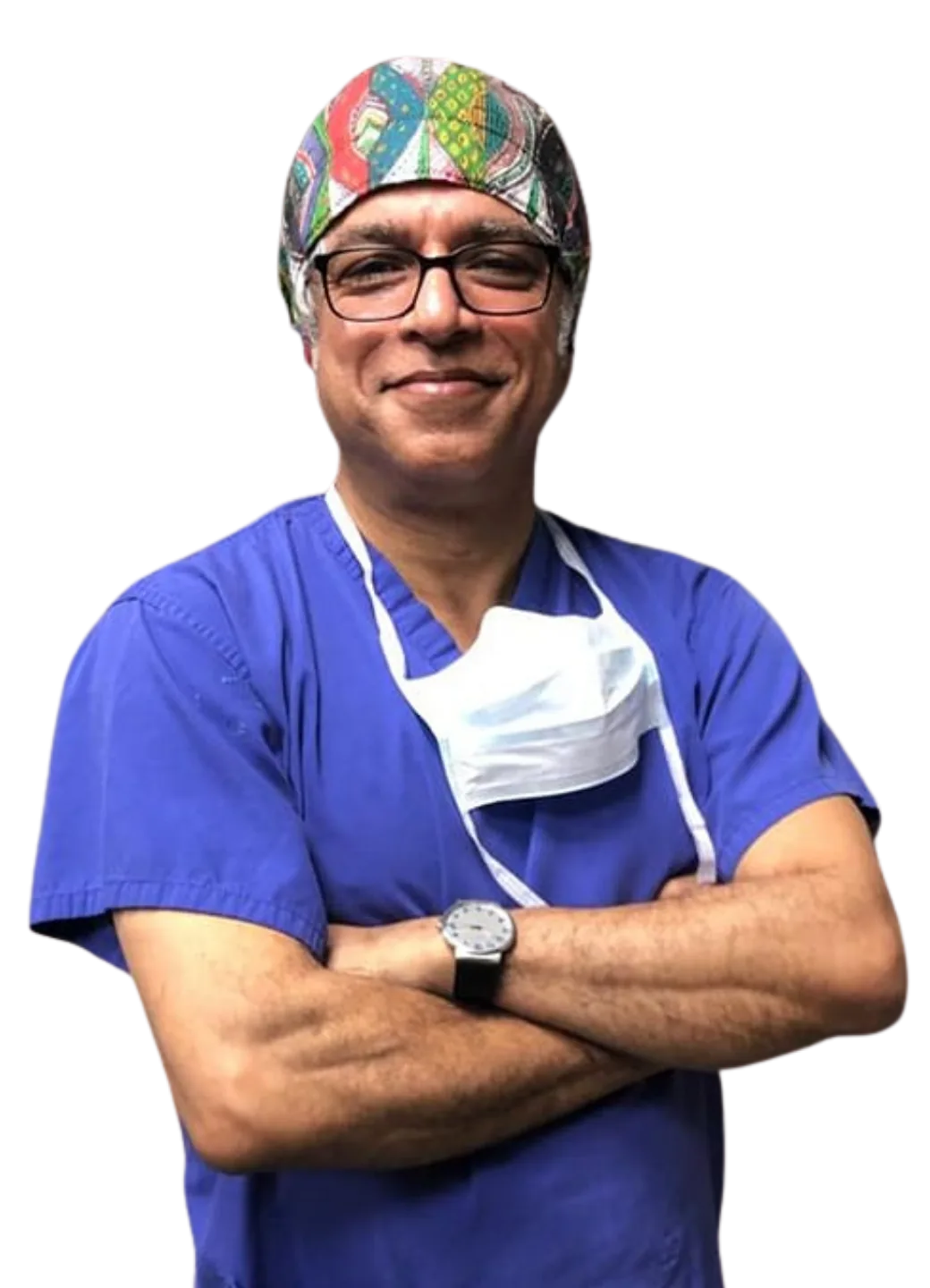
Professor Dr. S.M.G. Kibria

Keyhole repair · Same-day discharge · 35,000+ procedures

Professor Dr. SMG Kibria — Best Hernia Surgeon in Bangladesh
  • FRCS (England)
  • FRCS (Glasgow)
  • FRCS (Edinburgh)
  • FRCS (General)
  • MSc (Leeds)
  • MBBS (DMC)
The Procedure

What Is Hernia Surgery?

A measured, modern explanation of one of the most common abdominal wall operations performed worldwide — and why a mesh repair changes lives.

Hernioplasty

The surgical repair of a weakened abdominal wall

A hernia is a protrusion of tissue or organ through a weak spot in the abdominal wall — usually a visible or palpable bulge in the groin, navel, or near a previous scar. Surgical repair is the only definitive treatment. A modern mesh repair reinforces the weak area without tension and dramatically reduces the chance of recurrence.

  • 40–80 mins Surgery duration
  • 3 keyholes 5–10mm incisions
  • Same day Hospital discharge
  • <2% recurrence With modern mesh
Signs & Symptoms

When You May Need Surgery

Most hernias are diagnosed from a visible bulge and a clinical examination. Surgery is recommended when one or more of the following are present.

  • Visible bulge — in the groin, abdomen, navel, or near a previous surgical scar.
  • Bulge that appears with strain — coughing, lifting, or standing — and disappears when lying flat.
  • Aching or burning pain — especially after standing for long periods or physical exertion.
  • Heaviness or dragging sensation — particularly in the groin or lower abdomen.
  • Bulge enlarging over time — hernias do not heal on their own and tend to grow.
  • Discomfort during exercise or work — disrupting daily activity, gym training, or lifting.
  • Constipation or bowel changes — when intestine is involved in the hernia sac.
  • Sudden severe pain, vomiting or fever — possible strangulation. Seek urgent surgical care.
Surgical Techniques

Types of Hernia Surgery Offered

Prof. Kibria selects the most appropriate technique for each patient based on hernia type, size, anatomy, and previous abdominal surgery.

01

Laparoscopic TAPP / TEP Repair

Gold Standard

Keyhole repair through 3 small (5–10mm) incisions. A lightweight mesh is placed behind the abdominal wall defect to provide tension-free reinforcement. Especially recommended for bilateral inguinal hernias, recurrent hernias, and athletic patients returning quickly to activity.

02

Open Mesh Repair (Lichtenstein)

Time-Tested

A robust, well-established repair performed through a single 5–8cm incision over the hernia. Mesh is sutured in place to strengthen the abdominal wall. Excellent option for primary unilateral inguinal hernias and patients in whom general anaesthesia is best avoided.

03

Umbilical & Ventral Hernia Repair

Common Variants

For hernias at the navel or along the midline of the abdomen. Small defects may be repaired primarily; larger or recurrent defects benefit from a mesh repair — performed laparoscopically or open depending on size and location.

04

Incisional & Complex Hernia Repair

Complex Cases

For hernias developing through a previous surgical scar, or for large, recurrent, or multi-defect hernias. Repair may involve component separation, dual-layer mesh, or a hybrid open/laparoscopic approach tailored to the anatomy.

After Your Surgery

Recovery Timeline

Most patients are surprised by how quickly they return to normal life after a modern hernia repair. Here's the typical week-by-week timeline.

Day 0 — Operation Day

Surgery & Same-Day Discharge

40–80 minute repair under general anaesthesia (or spinal/regional for selected open cases). Light meal allowed 4–6 hours after surgery. Walking encouraged the same evening. Most patients go home that night.

Days 1–3 — Home Recovery

Rest, Hydration & Gentle Walking

Regular pain relief, short walks around the house, soft scrotal support for inguinal repairs. Showering permitted after 24 hours. Most patients are off strong painkillers by day two.

Days 7–10 — Wound Review

Return to Office Work

Wound review with Prof. Kibria — dressings removed, healing confirmed. Sedentary office work and driving usually resumed. Light walking is encouraged for circulation.

Week 2 — Light Activity

Light Activity Resumed

Walking, gentle stretching, household activity. No heavy lifting (over 5 kg), no abdominal exercises, and no contact sports yet. Most discomfort settles by the end of week two.

Weeks 4–6 — Full Recovery

Unrestricted Activity

Heavy lifting, gym training, contact sports, swimming, and long-haul travel — all resumed. The mesh becomes fully integrated into the body tissue and there are no long-term activity restrictions.

Frequently Asked

Hernia Surgery FAQs

Answers to the most common questions from patients considering hernia surgery in Bangladesh. Have another question? Send us a message.

Who is the best hernia surgeon in Bangladesh?

Prof. Dr. S.M.G. Kibria is widely regarded as one of the most qualified hernia surgeons in Bangladesh. He holds four FRCS fellowships (England, Glasgow, Edinburgh, and General), is registered with the General Medical Council (UK), trained and practised in the UK for 18 years, and has personally performed over 35,000 surgeries — including more than 3,000 hernia repairs across all major types.

Is laparoscopic hernia surgery safe?

Yes — laparoscopic hernia repair (TAPP and TEP) is recognised by international surgical societies as a safe, effective gold-standard option for inguinal and many other hernias. In experienced hands the procedure has a recurrence rate below 2% and major complication rates under 1%.

Lightweight modern mesh is well-tolerated by the body and is the standard of care worldwide.

How long is the recovery after hernia surgery?

Most patients are discharged the same day or the morning after surgery. Office work can usually be resumed within 7 days, light physical activity by week 2, and full unrestricted activity — including heavy lifting and contact sports — at around 4 to 6 weeks.

Open repair typically requires a slightly longer recovery than laparoscopic.

What is hernia mesh and is it safe?

Hernia mesh is a fine, flexible medical-grade material (usually lightweight polypropylene or a composite) placed to reinforce the weak area of the abdominal wall. It allows tension-free repair, which reduces pain and recurrence.

Modern lightweight mesh has been used safely for decades and dramatically reduces the chance of hernia recurrence compared to suture-only repair. Mesh complications are uncommon and usually manageable.

Can I avoid hernia surgery?

Hernias do not heal on their own — they tend to enlarge over time. Surgery is the only definitive treatment. A truss or support belt may temporarily reduce symptoms but does not cure the hernia.

In very small, asymptomatic hernias in low-risk patients, watchful waiting is sometimes appropriate. However, urgent surgery is required if the hernia becomes painful, irreducible, or shows signs of strangulation.

Laparoscopic vs. open hernia repair — what's the difference?

Laparoscopic (keyhole) repair is performed through 3 small incisions of 5–10mm using a camera and slender instruments; mesh is placed from inside the abdomen. Open repair uses a single 5–8cm incision over the hernia.

Laparoscopic offers less post-operative pain, faster return to work, and better cosmetic results — especially for bilateral or recurrent hernias. Open repair is excellent for primary unilateral hernias and remains a robust, time-tested option.

How do I know if I have a hernia?

The most common sign is a visible or palpable bulge in the groin, abdomen, or navel — often more obvious when standing, coughing, or lifting, and that disappears when lying down. Other symptoms include a dragging or heavy sensation, burning or aching pain, and discomfort during physical activity.

Urgent care is required if the bulge becomes painful, hard, or discoloured, or if you develop severe pain, vomiting, or fever — these can indicate strangulation.

Where does Prof. Kibria perform hernia surgery in Dhaka?

Prof. Kibria consults at two chambers in Gulshan, Dhaka:

Lake View Clinic — House-05, Road 79, Gulshan-2, Dhaka 1212.
SMG Kibria Foundation — Ta-97, 5th Floor, Middle Badda, Gulshan, Dhaka 1212.

Surgeries are performed at leading partner hospitals in Dhaka with full laparoscopic theatre facilities. To book a consultation, call +880 1711-402445 or request an appointment online.

Take the First Step

World-Class Surgical Care, Right Here in Dhaka

Whether you need a surgical consultation, a second opinion, or emergency care — Professor Dr. SMG Kibria and his team are here for you.