01
Standard Laparoscopy
Gold Standard3–4 keyhole incisions of 5–12mm. The vast majority of modern abdominal procedures are performed this way — appendix, gallbladder, hernia, bowel resection, diagnostic laparoscopy, and more.
Professor Dr. S.M.G. Kibria
Full-spectrum keyhole surgery · 35,000+ procedures · 40 years
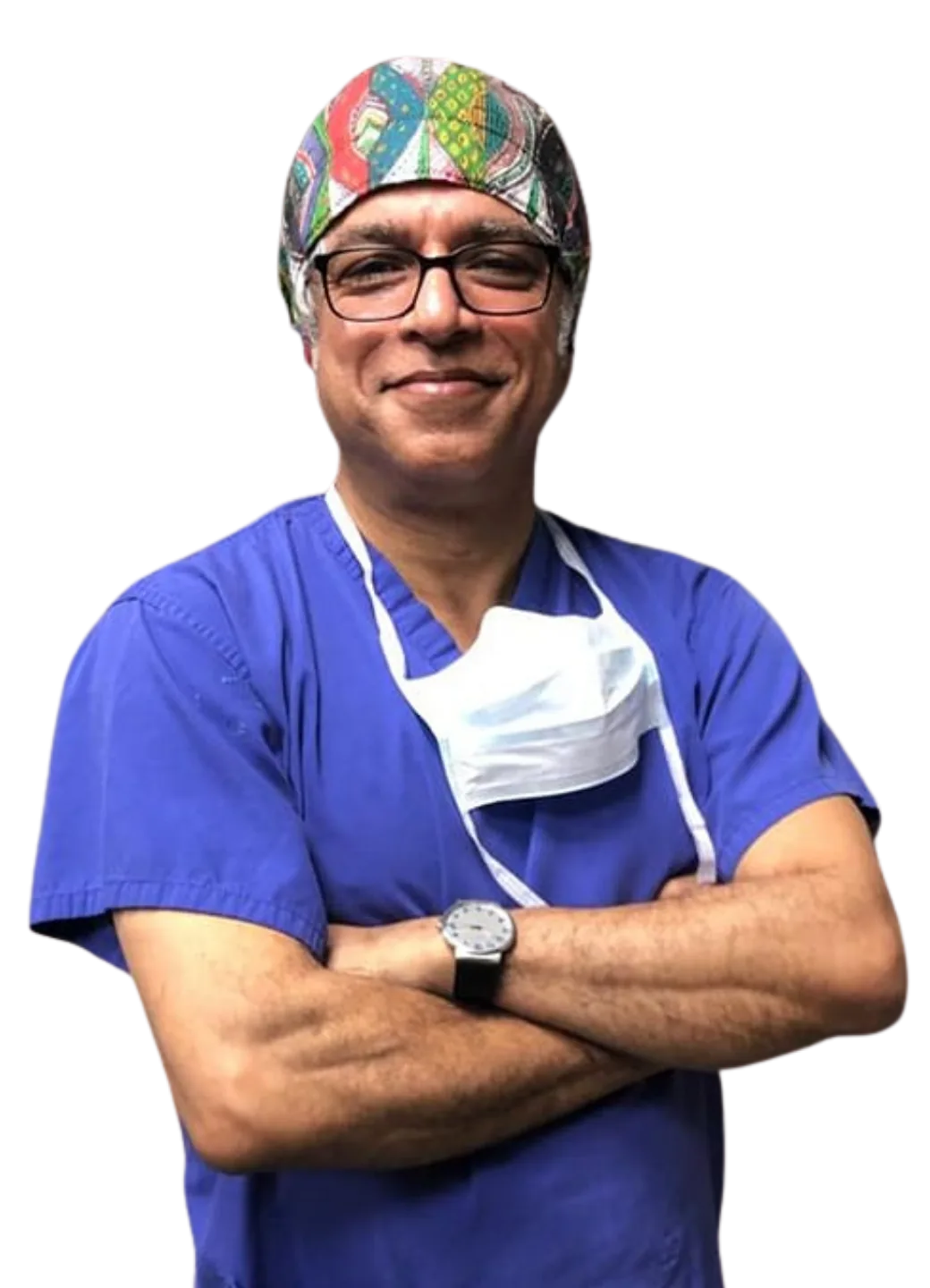
Modern keyhole surgery uses a few tiny incisions instead of one large one — dramatically reducing pain, scarring, and recovery time across the full spectrum of general surgical disease.
Laparoscopic (keyhole) surgery has revolutionised modern general surgery. Through 3–4 small incisions of 5–12mm, a slender high-definition camera and instruments allow the surgeon to operate inside the abdomen while watching a magnified monitor view. The result: less pain, faster recovery, better cosmetics, and fewer wound complications compared to traditional open surgery — across the full spectrum of abdominal procedures.
Prof. Kibria's general & laparoscopic practice covers the full breadth of abdominal surgical disease.
Prof. Kibria's experience spans the modern minimally invasive techniques as well as traditional open surgery, deployed as each case requires.
3–4 keyhole incisions of 5–12mm. The vast majority of modern abdominal procedures are performed this way — appendix, gallbladder, hernia, bowel resection, diagnostic laparoscopy, and more.
Performed through a single incision hidden in the umbilicus — cosmetically near-invisible. Suitable for selected uncomplicated procedures in appropriate patients.
A traditional single larger incision. Reserved for very complex disease, dense adhesions from previous surgery, or when laparoscopic completion is not safe. Equally effective in skilled hands.
24-hour cover for emergency abdominal pathology — appendicitis, bowel obstruction, perforated ulcer, abdominal trauma, severe infection. Rapid decision-making informed by 4 decades of experience.
Recovery varies by procedure — but laparoscopic recovery is consistently faster than open surgery.
30–120 minute procedure under general anaesthesia. Light meal allowed 4–6 hours after. Walking encouraged the same evening. Most uncomplicated cases discharged that night.
Light meals, regular pain relief, short walks. Most are off strong painkillers by day 2. Shower allowed after 24 hours.
Wound check, removal of dressings, review of histopathology if relevant. Sedentary office work and driving usually resumed.
Walking, gentle stretching, normal diet. No heavy lifting (over 5 kg) or strenuous abdominal exercise yet. Most patients feel well.
Heavy lifting, gym training, contact sports — all resumed. Small scars continue to fade over 6–12 months.
Prof. Dr. S.M.G. Kibria — FRCS x4, GMC Registered, 18 years UK consultant practice, 35,000+ surgeries — is one of Bangladesh's most experienced laparoscopic surgeons.
Performed through 3–4 small incisions of 5–12mm with a thin camera and slender instruments. Operating on an HD monitor. Less pain, faster recovery, better cosmetics than open surgery.
Almost the entire range of modern general surgery — gallbladder, hernia, appendix, intestinal surgery, splenectomy, adrenalectomy, and more.
Yes — in experienced hands, at least as safe as open surgery with less pain, infection, and hernia formation.
Same-day or overnight discharge for most. Office work in 7–14 days. Full unrestricted activity at 4–6 weeks. Significantly faster than open surgery.
No — 3–4 small scars of 5–12mm, usually in cosmetically inconspicuous positions. They fade and become nearly invisible over 6–12 months.
When laparoscopy cannot be safely completed: severe inflammation, dense adhesions, very large or complex disease. About 2–5% of planned laparoscopic cases are converted.
Lake View Clinic — House-05, Road 79, Gulshan-2. SMG Kibria Foundation — Ta-97, Middle Badda, Gulshan. Call +880 1711-402445.
Whether you need a surgical consultation, a second opinion, or emergency care — Professor Dr. SMG Kibria and his team are here for you.