FREQUENTLY ASKEDQUESTIONS
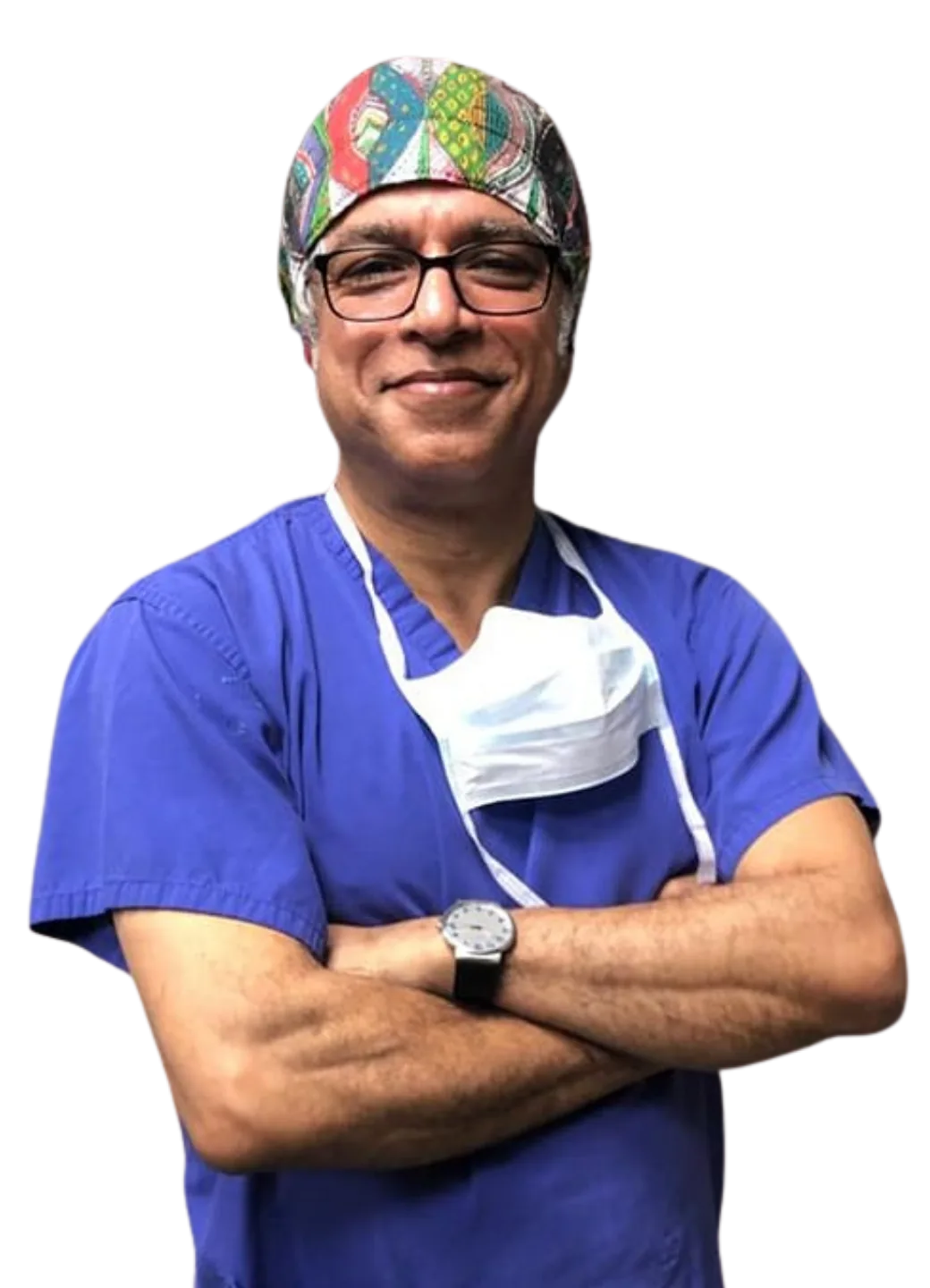
Professor Dr. S.M.G. Kibria
All your surgical questions — answered in one place
- FRCS (England)
- FRCS (Glasgow)
- FRCS (Edinburgh)
- FRCS (General)
- MSc (Leeds)
- MBBS (DMC)
Jump to Your Question
Quick links to every surgical speciality covered by Prof. Kibria — tap a topic to jump straight to its FAQs.
All Frequently Asked Questions
General Questions
Booking, chambers, consultation hours, and how the practice works.
How do I book an appointment with Prof. Kibria?
You can request an appointment through the online form at /request-appointment/, or call +880 1711-402445. Our team will respond to confirm a date and time.
Where are Prof. Kibria's chambers located?
Prof. Kibria consults at two chambers in Gulshan, Dhaka:
Lake View Clinic — House-05, Road 79, Gulshan-2, Dhaka 1212.
SMG Kibria Foundation — Ta-97, 5th Floor, Middle Badda, Gulshan, Dhaka 1212.
Does Prof. Kibria offer second opinions?
Yes. Please bring all available diagnostic reports, imaging, and previous treatment records to your consultation. Second opinions are welcomed and treated with the same care as primary consultations.
Are international patients welcome?
Yes. Prof. Kibria regularly treats patients travelling from across Bangladesh and abroad. International patients should reach out by email at info@smgkibria.com for advance planning, written quotations, and travel logistics.
What should I bring to my consultation?
Bring any previous medical records, recent scans or reports (ultrasound, CT, MRI, X-rays), a complete list of current medications, allergies, and a brief written history of your symptoms. The more complete the information, the more accurate the consultation.
How urgent are emergencies handled?
Genuine surgical emergencies are prioritised. Please call the clinic line on +880 1711-402445 and mention "urgent". For life-threatening symptoms (severe bleeding, breathing difficulty, sudden severe pain), call emergency services or attend the nearest hospital emergency department first.
Gallbladder Surgery
Laparoscopic cholecystectomy, gallstones, recovery. More on the gallbladder surgery page →
Who is the best gallbladder surgeon in Bangladesh?
Prof. Dr. S.M.G. Kibria — FRCS x4, GMC Registered (UK), 18 years UK consultant practice, 35,000+ surgeries — has performed over 2,500 cholecystectomies with a success rate exceeding 99% and same-day discharge in most uncomplicated cases.
Is laparoscopic gallbladder surgery safe?
Yes — laparoscopic cholecystectomy is the gold-standard treatment for symptomatic gallstones worldwide. Major complication rates are under 1% with experienced surgeons.
How long is the recovery after gallbladder surgery?
Same-day or overnight discharge. Office work in 7–10 days, light activity by week 2, full activity at 4–6 weeks.
Can I avoid gallbladder surgery?
If you have symptomatic gallstones, surgery is the only definitive treatment. Asymptomatic stones in average-risk adults can sometimes be observed.
Will I need to change my diet after gallbladder removal?
Low-fat diet for 1–2 weeks. After that, the liver compensates and most patients return to a completely normal diet.
Laparoscopic vs open gallbladder surgery — what's the difference?
Laparoscopic uses 3–4 small (5–12mm) incisions; open uses a single 10–15cm incision. Laparoscopic is far less painful with faster recovery. Open is reserved for 2–5% of complex cases.
Hernia Surgery
Laparoscopic and open mesh repair, TAPP/TEP. More on the hernia surgery page →
Is laparoscopic hernia surgery safe?
Yes — TAPP and TEP are the gold standard for inguinal hernias. Recurrence rates are below 2% with experienced surgeons.
What is hernia mesh and is it safe?
Mesh is a fine, lightweight medical-grade material placed to reinforce the weak area. Modern mesh has been used safely for decades and dramatically reduces recurrence.
How long is the recovery after hernia surgery?
Same-day or overnight discharge. Office work in 7 days. Light activity by week 2. Full unrestricted activity at 4–6 weeks.
Can I avoid hernia surgery?
Hernias do not heal on their own. Surgery is the only definitive treatment. A truss may temporarily reduce symptoms but does not cure. Urgent surgery is needed for strangulation.
How do I know if I have a hernia?
Most common sign is a visible bulge in the groin, abdomen, or navel — often more obvious on standing or coughing, disappearing when lying flat.
Laparoscopic vs open hernia repair — what's the difference?
Laparoscopic uses 3 small (5–10mm) incisions; open uses a single 5–8cm incision. Laparoscopic offers less pain and faster recovery — especially good for bilateral or recurrent hernias.
Piles & Anal Fissure
Laser piles treatment, stapler hemorrhoidopexy, anal fissure. More on the piles & fissure page →
Is laser piles treatment painful?
No — laser piles treatment is one of the least painful options. The diode laser seals haemorrhoidal vessels without cutting or stitching. Most patients describe only mild discomfort.
How long does recovery take after piles surgery?
Laser or stapler: office work in 3–5 days, normal activity in 1–2 weeks. Conventional open haemorrhoidectomy: 2–3 weeks.
Laser vs conventional piles surgery — what's the difference?
Laser shrinks and seals the haemorrhoidal tissue with minimal damage. Conventional removes it with a scalpel — effective for very advanced cases but longer recovery. Stapler hemorrhoidopexy lifts and re-fixes prolapsed tissue.
Can piles come back after surgery?
Modern laser and stapler treatments have low recurrence rates of 5–10% over 5 years. Long-term success depends on high-fibre diet, water, regular bowel habits, and avoiding straining.
What is an anal fissure and how is it treated?
A small tear in the anal canal causing sharp pain and bleeding. Acute fissures usually heal with stool softeners, sitz baths, and topical medications. Chronic fissures benefit from lateral internal sphincterotomy — 95%+ success rate.
How do I know if I need piles surgery?
Common signs: rectal bleeding, itching, palpable lump, mucus discharge, prolapsed tissue. Grade I–II often respond to lifestyle; grade III–IV typically benefit from a procedure.
Parathyroid Surgery
Minimally invasive parathyroidectomy for hyperparathyroidism. More on the parathyroid page →
What is hyperparathyroidism?
Overactivity of one or more parathyroid glands causing high blood calcium. Symptoms: kidney stones, bone thinning, abdominal pain, depression, fatigue. Surgery is the only definitive cure.
Is parathyroid surgery safe?
Yes — cure rates exceed 95% with major complication rates under 2%. The key factors are accurate pre-operative localisation, an experienced endocrine surgeon, and intra-operative PTH monitoring.
What is minimally invasive parathyroidectomy?
A small 2–3cm targeted incision over the localised diseased gland — rather than a four-gland exploration. Intra-operative PTH monitoring confirms successful removal. Smaller scar, faster recovery, equal cure.
Will I need lifelong medication after parathyroid surgery?
No. Once the diseased gland is removed, the remaining 3 normal glands take over. A short course of oral calcium and vitamin D is usually all that's needed.
How long is the recovery after parathyroid surgery?
Same-day or overnight discharge. Office work resumed within 7 days. Full unrestricted activity by week 2–3. The neck scar fades over 6–12 months.
Vascular Treatment
Angioplasty, bypass, endovascular surgery for arterial & venous disease. More on the vascular treatment page →
What is peripheral artery disease (PAD)?
PAD is narrowing of the leg arteries from plaque build-up — causing leg pain on walking, cold feet, non-healing wounds, and in severe cases, gangrene. Risk factors: smoking, diabetes, hypertension, high cholesterol.
Is angioplasty safe?
Yes — performed through a small puncture under local anaesthesia with sedation. Major complication rates under 2%. Most patients are discharged within 24 hours.
Angioplasty vs bypass surgery — what's the difference?
Angioplasty opens a blocked artery from inside with a balloon (often leaving a stent). Bypass uses a graft to route blood around the blockage. Angioplasty is less invasive; bypass is durable for long, complex blockages.
What's the recovery after vascular surgery?
Endovascular: home in 24 hours, normal activity within days. Open bypass: 3–7 days in hospital, office work in 4–6 weeks. Lifelong medication and lifestyle measures required.
Can vascular disease be treated without surgery?
Early cases respond to smoking cessation, exercise, diet, statins, and anti-platelet medication. Surgery is reserved for advancing symptoms or critical limb ischaemia.
Varicose Veins
EVLA laser, sclerotherapy, RFA, conventional vein surgery. More on the varicose veins page →
What is EVLA (endovenous laser ablation)?
EVLA is the modern gold-standard treatment. A laser fibre passed inside the diseased vein under ultrasound guidance seals it shut. Walk-in, walk-out procedure under local anaesthesia.
Is laser vein treatment painful?
No — EVLA is performed under local anaesthesia. Most patients feel only mild pressure during the procedure and minor bruising afterwards.
How long is the recovery after EVLA?
Walk out of the clinic immediately. Return to office work the next day. Compression stockings for 2 weeks. Light exercise at week 1, gym by week 3.
Will my varicose veins come back?
Over 95% of treated veins remain closed at 5 years. New veins can develop in other areas over time, especially with pregnancy, prolonged standing, or obesity.
EVLA vs sclerotherapy vs surgery — what's the difference?
EVLA seals the main truncal vein with laser. Sclerotherapy injects foam for smaller branches. Conventional surgery strips the vein — effective but longer recovery. Most patients today benefit from EVLA, often combined with sclerotherapy.
Diabetic Foot & Gangrene
Limb salvage, debridement, revascularisation, wound care. More on the diabetic foot page →
Can a diabetic foot be saved?
Yes — early, aggressive, multi-disciplinary care saves more than 80% of diabetic feet. Limb salvage rates depend on early presentation, prompt revascularisation, infection control, and wound care.
Is gangrene always treated with amputation?
No. Many cases respond to revascularisation, debridement, and antibiotics. Amputation is reserved for irreversible tissue death — and at the lowest possible level.
How quickly should diabetic foot symptoms be treated?
Urgently — within 24–48 hours. Diabetic foot infections deteriorate rapidly. Delay is a major risk factor for limb loss.
What causes diabetic foot complications?
Three factors: nerve damage (neuropathy), poor blood circulation, and increased infection risk. Poorly controlled blood sugar accelerates all three.
How do I know if I have a diabetic foot problem?
Warning signs: non-healing wound, redness, swelling, drainage, bad smell, dark skin, numbness, sudden severe pain. Diabetics should self-inspect their feet daily.
Dialysis AV Fistula
Radiocephalic, brachiocephalic and basilic transposition fistulas, AV grafts. More on the AV fistula page →
What is an AV fistula?
A surgical connection between an artery and a vein in the arm. High-flow blood thickens the vein wall over 6–12 weeks so it can be needled reliably for haemodialysis. The gold-standard dialysis access.
How long does it take for a fistula to mature?
6–12 weeks typically. Fistula exercises (squeezing a ball) help. Some mature in 4 weeks; others need balloon dilatation.
How long does an AV fistula last?
10+ years with proper care. Long-term patency depends on careful needling, avoiding compression, and periodic surveillance.
AV fistula vs AV graft — what's the difference?
Fistula uses your own artery and vein — longer-lasting, fewer infections, gold standard. Graft uses synthetic tubing — matures faster (2–3 weeks) but shorter lifespan.
When should I have my fistula created?
Ideally 3–6 months before dialysis is needed — once eGFR drops to around 20. Early creation allows maturation before dialysis is urgent.
Breast Surgery
Breast lump surgery, lumpectomy, mastectomy, sentinel node biopsy. More on the breast surgery page →
Is every breast lump cancer?
No — the vast majority of breast lumps are benign. However, every new lump should be assessed with a triple test (clinical exam, imaging, biopsy when indicated).
Lumpectomy vs mastectomy — what's the difference?
Lumpectomy removes just the cancer with a margin — preserving the breast (combined with radiotherapy). Mastectomy removes the whole breast — for large, multifocal cancers or patient preference. Reconstruction can be added.
What is a sentinel lymph node biopsy?
A minimally invasive way to check lymph node spread. The first 1–3 nodes that drain the breast are identified using dye/tracer and removed. If clear, no further node surgery — sparing arm side-effects.
How long is the recovery after breast surgery?
Lumpectomy: day-case, office work in 7–10 days. Mastectomy: 1–2 nights in hospital, office work in 3–4 weeks. Full activity at 4–6 weeks.
Can I have breast reconstruction in Bangladesh?
Yes — immediate or delayed reconstruction options, including implant-based or autologous (using your own tissue). Prof. Kibria works with plastic surgery colleagues for the right plan.
Endoscopy & Colonoscopy
Upper GI endoscopy, colonoscopy, polypectomy, cancer screening. More on the endoscopy page →
Endoscopy vs colonoscopy — what's the difference?
Endoscopy examines the upper GI tract (oesophagus, stomach, duodenum) via the mouth. Colonoscopy examines the entire colon via the rectum.
Is endoscopy or colonoscopy painful?
No — both are performed under conscious sedation. Most patients have no recollection of the procedure.
How do I prepare for a colonoscopy?
2 days before: low-residue diet. Day before: clear fluids and prescribed bowel preparation. Stop blood thinners and iron as advised. Clear bowel is essential.
When should I have a screening colonoscopy?
Age 45–50 for average-risk individuals, every 10 years if normal. Earlier and more frequently with family history of colorectal cancer or polyps.
What if a polyp is found?
Most polyps are removed during the same procedure (polypectomy) and sent for histological analysis. No separate operation needed.
General & Laparoscopic Surgery
Keyhole surgery for appendix, intestinal, abdominal and more. More on the general & laparoscopic page →
What is laparoscopic (keyhole) surgery?
Performed through 3–4 small incisions of 5–12mm with a thin camera and slender instruments. Operating on an HD monitor. Less pain, faster recovery, better cosmetics than open surgery.
What types of surgery can be done laparoscopically?
Almost the entire range of modern general surgery — gallbladder, hernia, appendix, intestinal surgery, splenectomy, adrenalectomy, and more.
Is laparoscopic surgery safe?
Yes — in experienced hands, at least as safe as open surgery with less pain, infection, and hernia formation.
Will I have a big scar?
No — 3–4 small scars of 5–12mm, usually in cosmetically inconspicuous positions. They fade and become nearly invisible over 6–12 months.
When is open surgery preferred?
When laparoscopy cannot be safely completed: severe inflammation, dense adhesions, very large or complex disease. About 2–5% of planned laparoscopic cases are converted.
World-Class Surgical Care, Right Here in Dhaka
Whether you need a surgical consultation, a second opinion, or emergency care — Professor Dr. SMG Kibria and his team are here for you.