01
Angioplasty & Stenting
EndovascularMinimally invasive opening of a blocked artery using a catheter and balloon, often leaving a stent. Performed through a small groin or arm puncture under local anaesthesia. Same-day or overnight discharge.
Professor Dr. S.M.G. Kibria
Angioplasty · Bypass · Limb salvage · 35,000+ procedures
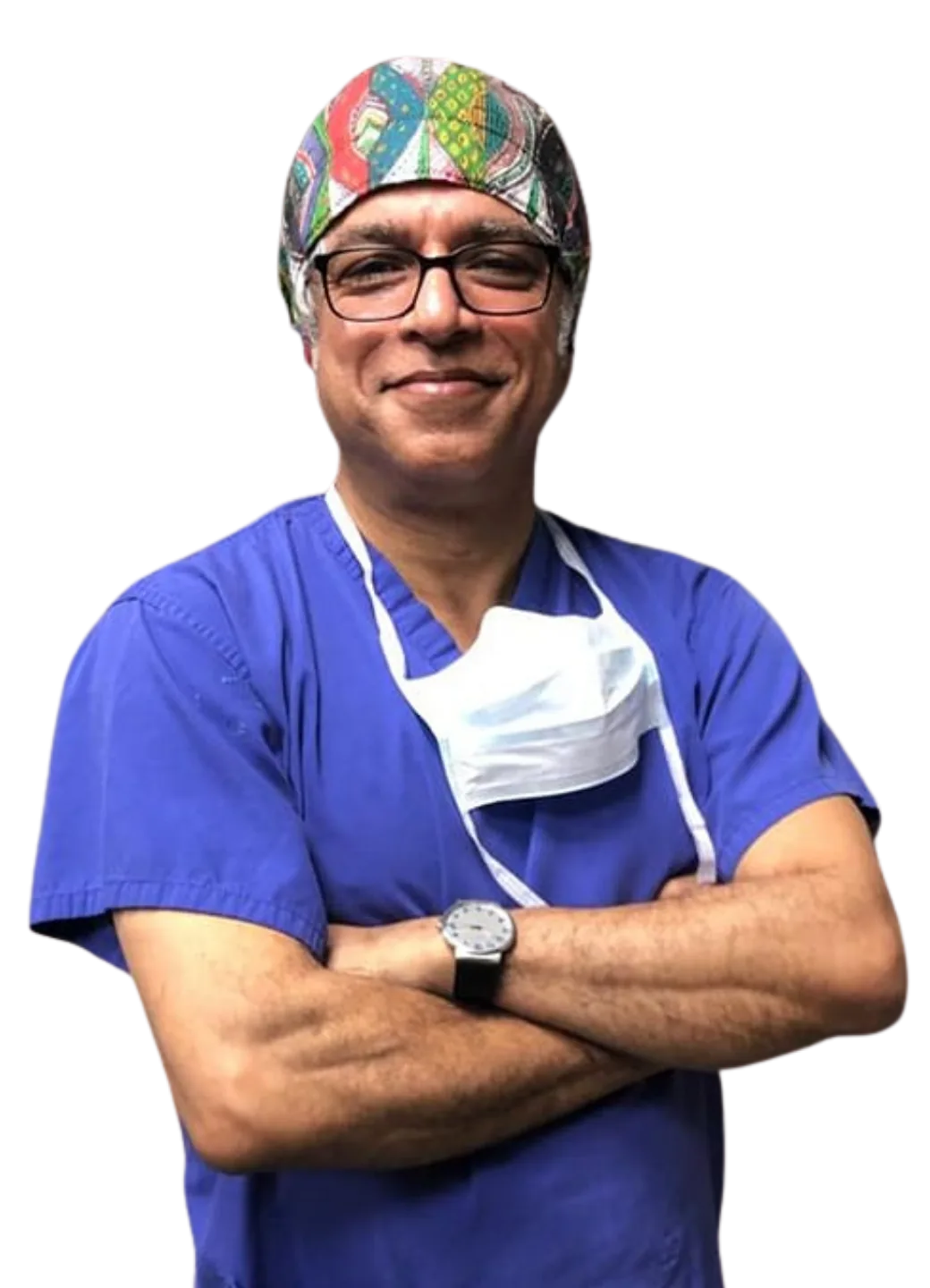
Modern care for diseases of the arteries and veins — from minimally invasive angioplasty to open bypass surgery, designed to restore circulation and save limbs.
Vascular disease affects the body's arteries and veins — narrowing them with plaque, weakening their walls (aneurysm), or blocking them with clots. Modern endovascular surgery uses catheter-based techniques to open blocked vessels with balloons and stents through a tiny puncture. For complex disease, open bypass surgery routes blood around the blocked area.
Vascular disease often starts silently — by the time symptoms appear, intervention is usually needed. The following warrant urgent assessment.
Prof. Kibria selects the most appropriate intervention based on imaging, severity, and the patient's overall health.
Minimally invasive opening of a blocked artery using a catheter and balloon, often leaving a stent. Performed through a small groin or arm puncture under local anaesthesia. Same-day or overnight discharge.
For long or complex blockages: a synthetic graft or the patient's own saphenous vein routes blood around the blocked segment. Durable, effective, and the gold standard for critical limb ischaemia.
For abdominal or thoracic aortic aneurysms: endovascular repair (EVAR) places a stent-graft from inside the artery, or open repair places a graft directly. Choice depends on aneurysm anatomy and patient factors.
Combined endovascular revascularisation, debridement, and advanced wound care for diabetic foot, gangrene, and critical limb ischaemia — preserving the limb whenever possible.
Recovery depends on the procedure. Modern endovascular techniques have transformed how quickly patients return to normal life.
Angioplasty: 60–90 minutes under local anaesthesia, ambulant after 4–6 hours. Bypass: 2–4 hours under general anaesthesia; observation in HDU/recovery overnight.
Most angioplasty patients go home day 1. Bypass patients usually go home day 3–5. Anti-platelet medication started.
Wound review, duplex ultrasound to confirm patency. Office work resumed for endovascular patients; light activity for bypass patients.
Bypass patients return to office work; light gym and walking. Full unrestricted activity by week 8 for open surgery.
Lifelong anti-platelet, statin, blood pressure and diabetes control. Smoking cessation. Regular surveillance scans.
Answers to the most common questions. Send us a message with another.
Prof. Dr. S.M.G. Kibria — Consultant Vascular Surgeon, FRCS x4, GMC Registered (UK), 18 years UK consultant practice, 35,000+ lifetime surgeries — is one of Bangladesh's most experienced vascular surgeons.
PAD is narrowing of the leg arteries due to plaque, causing leg pain on walking, cold feet, non-healing wounds and — in severe cases — gangrene. Risk factors: smoking, diabetes, hypertension, high cholesterol.
Yes — performed through a small puncture under local anaesthesia with sedation. In experienced hands, major complication rates are under 2%. Most patients are discharged within 24 hours.
Endovascular: home in 24 hours, normal activity in days. Open bypass: 3–7 days in hospital, return to office work in 4–6 weeks. Lifelong medication and lifestyle measures required.
Many early cases respond to smoking cessation, exercise, diet, statins, and anti-platelet medication. Surgery is reserved for advancing symptoms or critical limb ischaemia.
Warning signs: cramping leg pain on walking, cold/pale feet, non-healing wounds, sudden severe leg pain, or known risk factors. A Doppler ultrasound is the first investigation.
Angioplasty opens a blocked artery from inside using a balloon, sometimes leaving a stent. Bypass surgery routes blood around the blockage using a graft. Angioplasty is less invasive; bypass offers durable results for long, complex blockages.
Lake View Clinic — House-05, Road 79, Gulshan-2.
SMG Kibria Foundation — Ta-97, 5th Floor, Middle Badda, Gulshan. Call +880 1711-402445.
Whether you need a surgical consultation, a second opinion, or emergency care — Professor Dr. SMG Kibria and his team are here for you.